
Define correct.
Vaurd does the rest.
However complicated your operations are, Vaurd follows every order, payment and case across your systems from start to finish. It acts the moment one goes off track.
0.1 THE PROBLEM
Your systems were built to record. Your dashboards were built to report. Neither was built to notice when something is going wrong today, which is why your best people still spend their days chasing.
The promise: when we confirm an earlier delivery for a key account, the warehouse ships on the new date.
Grow twice as big and the pile grows with you. Your numbers slip just when they should be climbing, and more systems, reports or training won't close the gap.
0.2 THE GAP
Every tool you'd reach for watches something else.
0.3 THE VAURD ADVANTAGE
Watches like a hawk. Acts like one too.
Your team draws the flows and sets the rules, straight from strategy, and changes them the moment the business does. Vaurd checks every event against them and moves the second your intent breaks. No pipeline to maintain, no sprint to wait for.

0.4 HOW IT WORKS
This is the real app. Click any number to see what it does.


0.5 FOR YOUR TECHNICAL TEAM
Entirely within your control.
Just drag, drop, and define what correct looks like. Deploy lightweight Vaurd agents inside your environment that connect across your systems and validate outcomes the moment activity occurs.

Your data stays entirely within your environment
Your cloud. Your network. Your infrastructure. They connect to your systems locally, execute validation where your data lives, and never send it outside your perimeter. Your data stays entirely within your control.
Deploying the agent
Multi-source validation
One flow can pull from multiple systems simultaneously: your ERP, your database, your warehouse and validate across all of them in a single check.
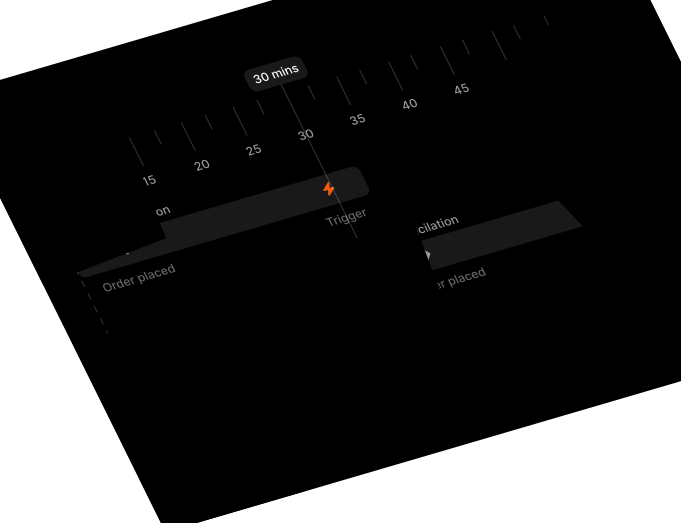
Validation on your terms
Validate in real time as activity occurs, schedule checks at a future point, or trigger delayed verification, like confirming an order's state 30 minutes after placement or running reconciliation hours after a transaction. Validation runs exactly when you need it.
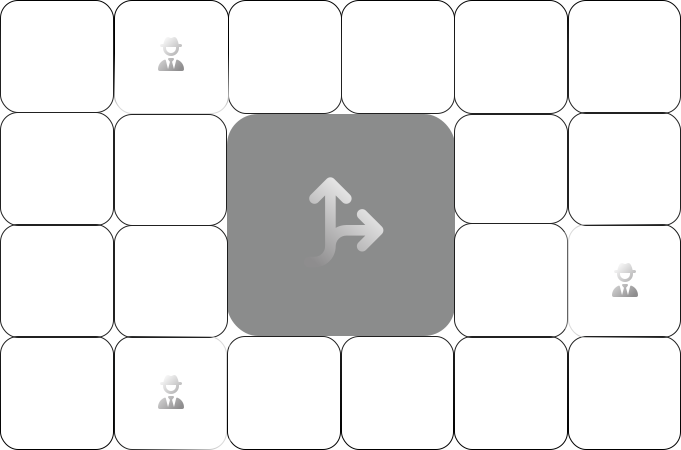
Rules reuse across agents
Different regions, different databases, same rules. Deploy independent agents across your environments, each connecting locally to their own systems, while sharing the same flow logic across all of them. No duplication, no drift.
0.6 USE CASES
Four promises Vaurd watches and acts on.
0.7 HOW IT STARTS
Start with the one thing your team chases most.
Add the rest once it's working.
Two ways in. Both begin with a single flow.
Built in Bengaluru by Vaurd Labs, building the next generation of software for how businesses run.
What does your team chase the most?
Tell us in a line. We'll show you how Vaurd would watch it.